The Future of Family Wellbeing: Why Care Must Evolve Beyond Borders
The Future of Family Wellbeing: Why Care Must Evolve Beyond Borders
Famvablog

For many people living abroad, the greatest source of anxiety is not necessarily the inability to help. It is the uncertainty of not knowing when help is needed.
The Future of Family Wellbeing
For generations, caring for family was largely defined by proximity.
Parents lived close to their children. Families shared communities. Support systems were often built into daily life. When someone needed help, there was usually a relative, neighbour, or friend nearby to step in.
Today, that reality is changing.
Families are more connected than ever before, yet increasingly separated by geography. Millions of people now live hundreds or even thousands of miles away from the people they care about most. Careers, education, migration, and economic opportunities have created global families, where parents and children often live in different cities, countries, or continents.
While this shift has opened doors to new opportunities, it has also created a new challenge:
How do we care for the wellbeing of our loved ones when we are not physically present?
This question is becoming one of the defining family challenges of our generation.
Family Wellbeing Is Evolving
Traditionally, family wellbeing was often measured by financial stability, access to healthcare, and the ability to provide support when needed.
While these factors remain important, modern family wellbeing requires something more.
It requires visibility.
For many people living abroad, the greatest source of anxiety is not necessarily the inability to help. It is the uncertainty of not knowing when help is needed.
A parent may be living alone.
Medication may be missed.
Mobility may gradually decline.
Appointments may be forgotten.
Health conditions may worsen over time.
These changes rarely happen overnight. More often, they occur gradually and quietly, making them difficult to identify until they become significant problems.
As families become more geographically dispersed, wellbeing can no longer depend solely on physical presence.
The future demands new ways of staying connected, informed, and proactive.
The Shift From Reactive Care To Preventive Wellbeing
For decades, healthcare systems have largely focused on responding to illness after it occurs.
The future of family wellbeing requires a different approach.
Instead of waiting for emergencies, families need the ability to identify concerns earlier.
Instead of reacting to crises, they need tools that support prevention.
Preventive wellbeing is not simply about avoiding illness. It is about creating conditions that allow people to maintain independence, dignity, confidence, and quality of life for as long as possible.
This shift will be particularly important as populations continue to age around the world.
The question is no longer how long people live.
The question is how well they live.
Technology's Role In The Future Of Care
Technology is often viewed as a replacement for human interaction.
In reality, its greatest value may be the opposite.
The future of technology in family care is not about replacing relationships.
It is about strengthening them.
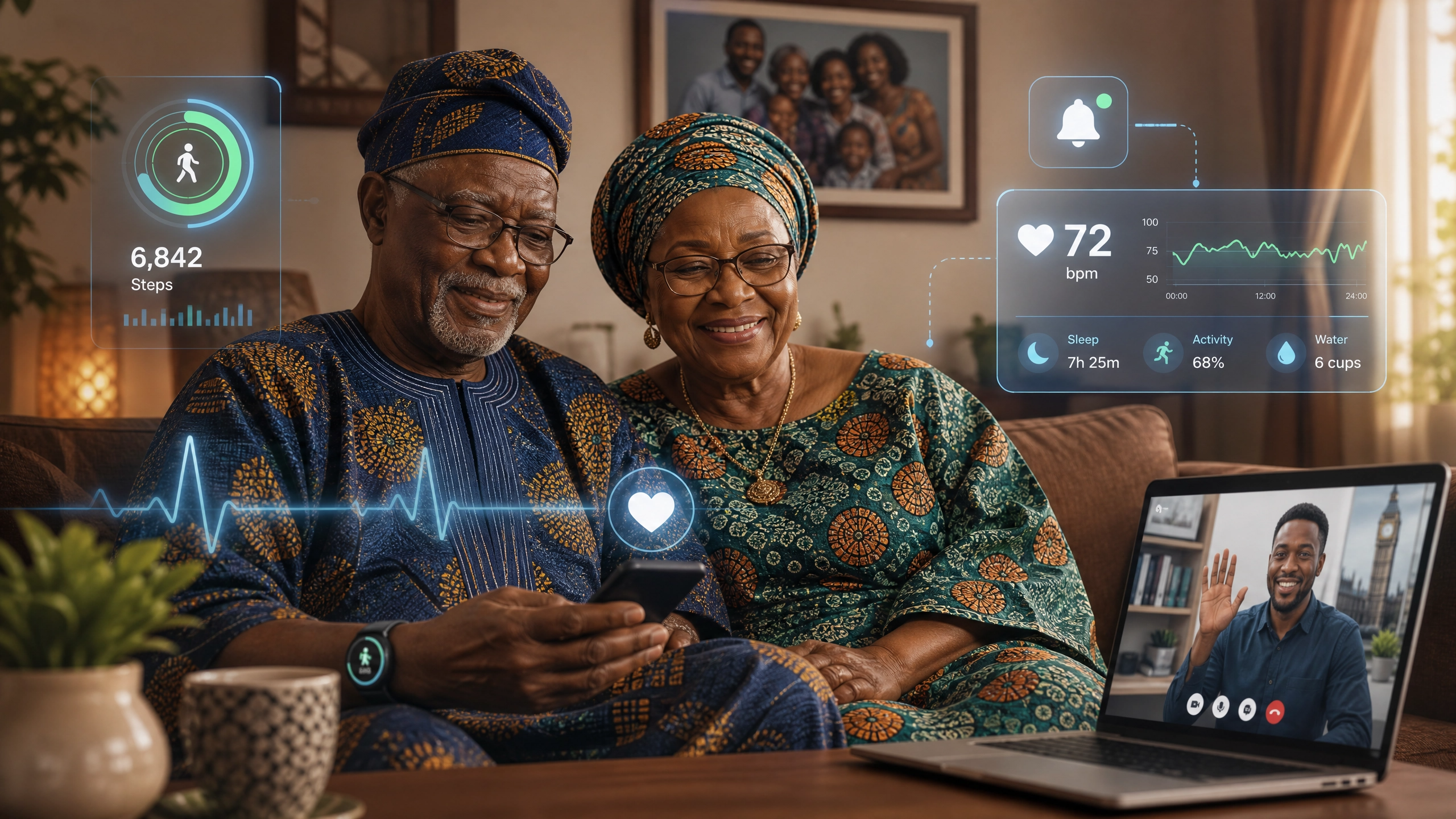
Technology can help families stay informed about important changes in wellbeing.
It can support medication adherence.
It can facilitate communication between family members and caregivers.
It can provide reassurance when everything is going well and alert loved ones when additional support may be required.
Most importantly, technology can help bridge the gap created by distance.
As digital health continues to evolve, the most successful solutions will not simply collect data. They will transform information into meaningful insights that help families make better decisions.
The Rise Of The Long-Distance Caregiver
One of the fastest-growing yet least-discussed groups in society is the long-distance caregiver.
These are individuals who support ageing parents, relatives, or loved ones from another city, country, or continent.
They often provide financial support.
They coordinate healthcare decisions.
They organise family care arrangements.
They check in regularly.
Yet despite these efforts, many still experience feelings of uncertainty and guilt because they cannot always be physically present.
The future of family wellbeing must acknowledge and support this reality.
Caregiving is no longer confined by location.
Support systems should not be either.
Building Wellbeing Beyond Borders
The future of family wellbeing will be defined by connection rather than proximity.
Families will increasingly rely on a combination of human support, healthcare services, community networks, and technology to ensure loved ones can live healthy, independent, and fulfilling lives.
Success will not be measured solely by the absence of illness.
It will be measured by confidence.
Confidence that loved ones are safe.
Confidence that support is available when needed.
Confidence that distance does not have to create uncertainty.
At its core, family wellbeing is about peace of mind.
And in a world where families are increasingly global, peace of mind must become borderless.
The future of family wellbeing is not simply about healthcare.
It is about empowering families with the visibility, support, and confidence they need to care for the people who matter most—wherever they may be.
Because distance should never determine the quality of care.
Because wellbeing should have no borders.