Monitoring parents remotely is not about replacing presence. It's about extending your care beyond distance. And in today's world, that's not just helpful, it's essential.
A Guide on How to Monitor Elderly Parents Remotely
Learn how to monitor elderly parents remotely from the UK using AI tools, daily wellness tracking, and smart platforms like Famva.
When Care Becomes Long-Distance
Living abroad while your parents are aging at home creates a unique kind of responsibility.
You care deeply. You check in often. But there's always one limitation:
You're not there, and when it comes to elderly care, absence creates uncertainty.
You can't see:
Their daily routines
Their physical movement
Their eating habits
Subtle changes in behaviour
This is why more families are searching for ways to monitor elderly parents remotely not just occasionally, but consistently.
This Is Why Remote Monitoring Is No Longer Optional
Traditionally, care depended on proximity.
But today:
Families are global
More parents are living alone
Independence is increasing
This creates a gap between responsibility for care and physical presence. It also highlights the risks of not monitoring properly.
Without proper monitoring:
Small health changes go unnoticed
Medication routines may be missed
Activity levels may decline silently
Emergencies may occur without warning
And often, the first sign of a problem is when it's already serious
What Does "Monitoring" Really Mean?
Monitoring is not about control. It's about awareness.
It means understanding:
What a normal day looks like
When something changes
Whether routines are being maintained
Good monitoring focuses on patterns, not isolated events.
Traditional Ways of Monitoring (and Their Limits)
1. Phone Calls
Helpful, but limited:
Relies on self-reporting
Often lacks detail
Can hide real issues
2. Family or Neighbour Updates
Useful, but inconsistent:
Not always reliable
Not real-time
Dependent on others
3. Occasional Visits
Important, but infrequent:
Only gives a snapshot
Doesn't reflect daily life
The Shift to AI-Based Remote Monitoring
This is where technology changes everything.
Remote elderly monitoring AI in Nigeria allows families to:
Track daily behaviour patterns
Receive alerts when something changes
Stay informed continuously
This transforms care from:
Occasional → Continuous
Reactive → Proactive
How AI Monitoring Works in Simple Terms
AI monitoring doesn't just collect data. It interprets patterns.
For example:
If activity drops → it flags a concern
If routines change → it identifies a pattern
If behaviour shifts → it alerts the family
This is what makes an AI wellness platform powerful, it sees what humans might miss.
Key Things to Monitor in Elderly Care
1. Daily Activity
Movement levels
Physical engagement
Routine consistency
2. Nutrition
Meal frequency
Eating habits
Diet quality
3. Behaviour Patterns
Sleep changes
Mood shifts
Energy levels
4. Routine Stability
Medication timing
Daily habits
Lifestyle consistency
This Is Where the Famva AI Wellness Platform Fits In
Famva is being built to make remote monitoring simple and effective.
It focuses on:
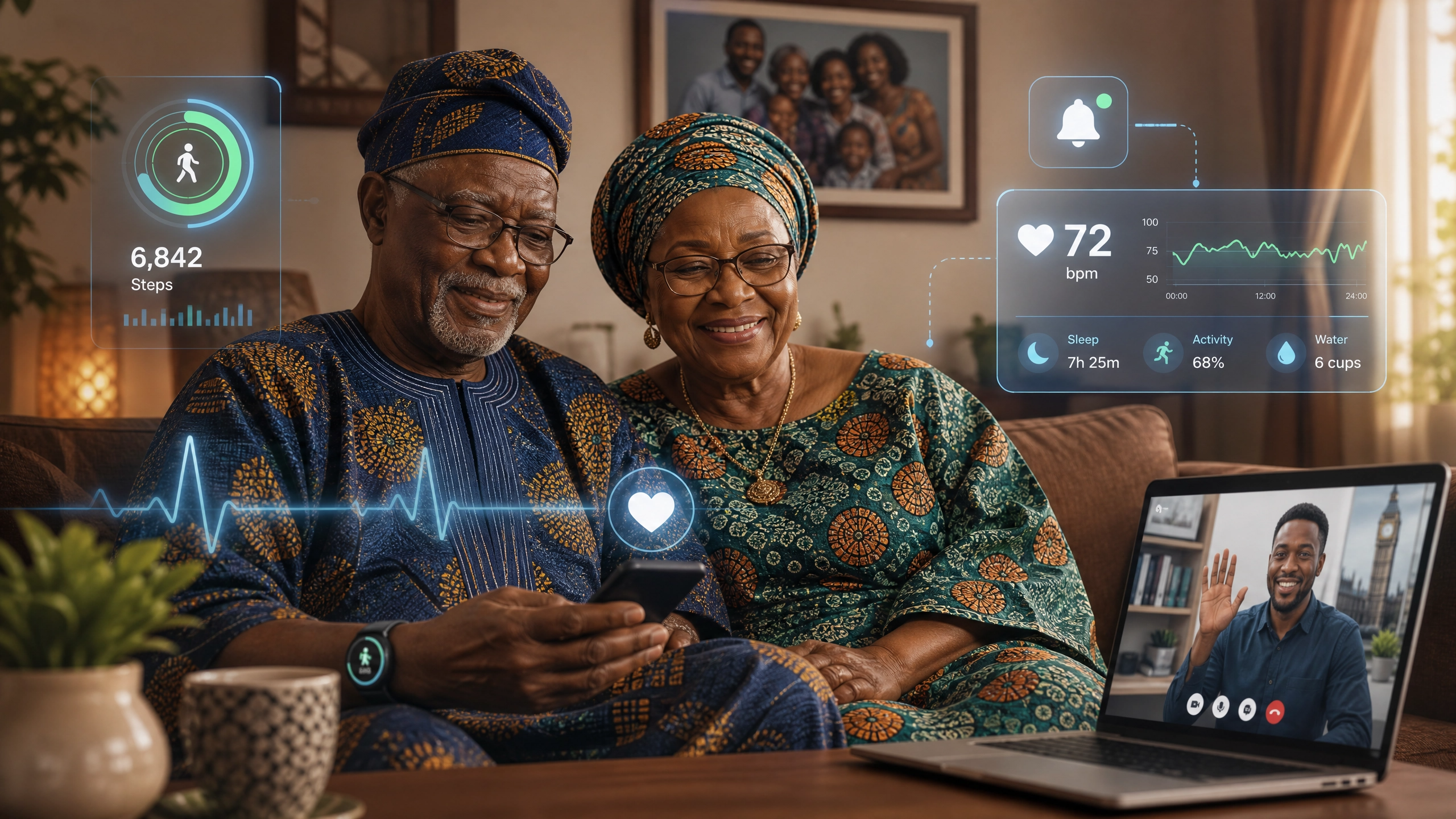
Daily wellness tracking
Smart alerts
Clear, actionable insights
Instead of guessing, families can:
Understand daily patterns
Detect changes early
Respond quickly
Benefits of Remote Monitoring
For Families in the UK
Peace of mind
Reduced anxiety
Better decision-making
For Elderly Parents
Maintained independence
Healthier routines
Early support when needed
Common Concerns About Monitoring
"Is it intrusive?"
No. When done correctly, it supports independence rather than controlling it.
"Is it complicated?"
Famva is designed to be simple and user-friendly.
Monitoring your parents remotely is not about replacing presence. It's about extending your care beyond distance. And in today's world, that's not just helpful, it's essential.
Join our waitlist to be among the first to use this service for free: www.famva.co.uk/waitlist