AI-powered wellness platforms
Why Remote Monitoring for Elderly Parents Is Becoming Essential for Modern Families — By Nosakhare
Famvablog
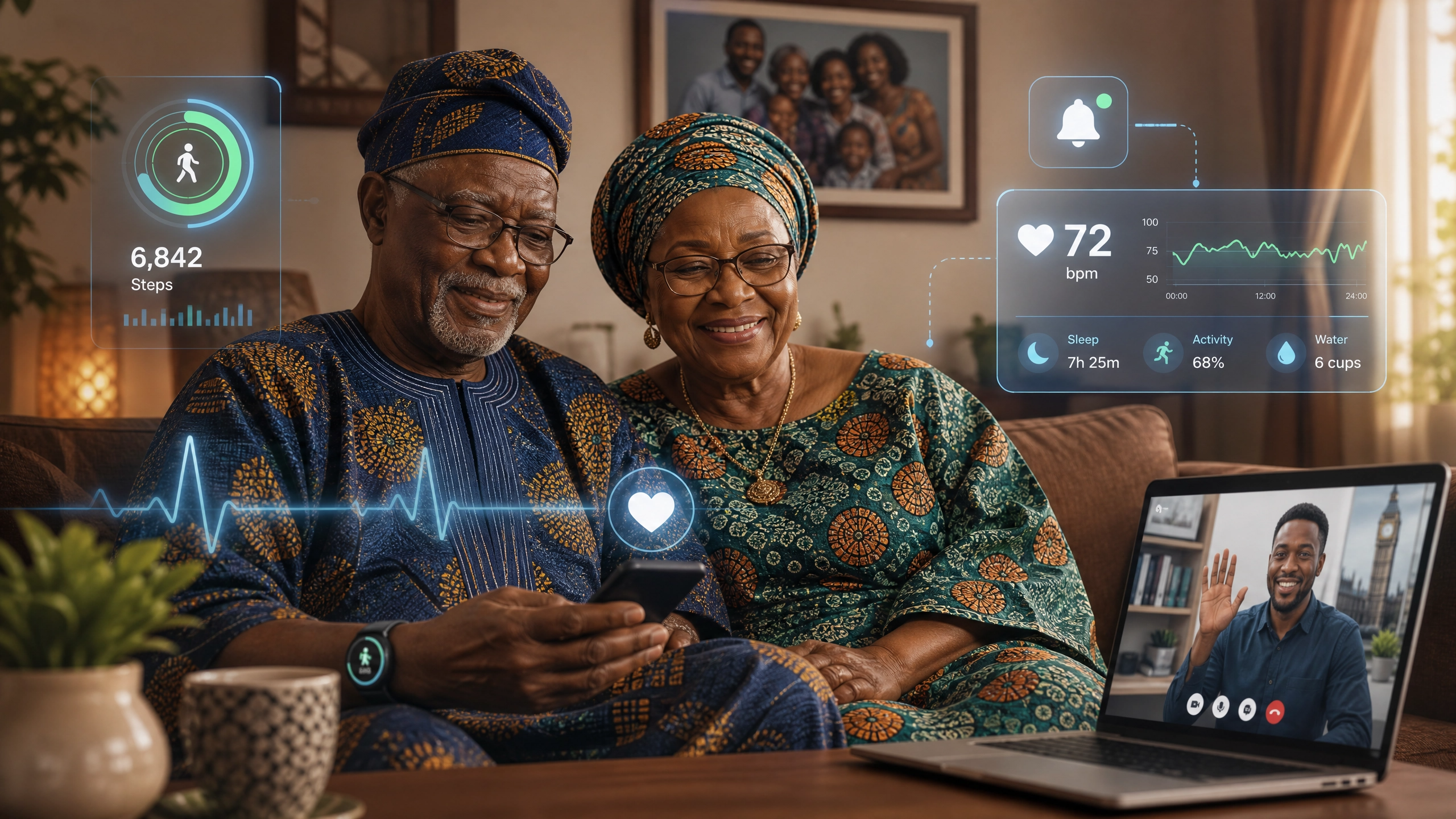
Most health concerns do not happen overnight. In many cases, warning signs appear gradually through subtle behavioural or routine changes.
Why Remote Monitoring for Elderly Parents Is Becoming Essential for Modern Families — By Nosakhare Eguagie
For generations, caring for ageing parents depended on one major factor: proximity.
Families lived close together. Adult children could check in regularly. Changes in health, routines, or behaviour were easier to notice naturally through everyday interaction.
But modern family life has changed dramatically.
Today, many families are spread across cities, countries, and even continents. Adult children are balancing careers, responsibilities, and life abroad, while ageing parents continue living independently at home.
At the same time, people are living longer than ever before, creating a growing need for continuous wellness support and proactive care.
This shift has created an important challenge for modern families:
How can families properly support elderly parents when they are not physically present?
The answer increasingly lies in remote wellness monitoring.
The Reality of Modern Elderly Care
Traditional elderly care models were built around physical presence.
The assumption was simple:
Family members would live nearby
Relatives could visit frequently
Daily routines and behavioural changes could be observed naturally
But in today’s world, that is no longer the reality for many families.
For example, many people living in the UK have elderly parents living in Nigeria or elsewhere abroad. Emotional connection remains strong, but physical distance often creates a visibility gap.
And when it comes to elderly wellbeing, visibility matters.
Most health concerns do not happen overnight. In many cases, warning signs appear gradually through subtle behavioural or routine changes.
Without consistent awareness, these signs can easily be missed.
The Small Changes That Often Go Unnoticed
One of the biggest risks in elderly wellness is not sudden emergencies.
It is the quiet, gradual changes that build over time.
These may include:
Reduced movement or physical activity
Missed medication routines
Increased fatigue
Poor eating habits
Changes in sleep patterns
Withdrawal from daily activities or social interaction
Individually, these changes may appear small.
ALSO READ - A Guide on How to Monitor Elderly Parents Remotely
However, together they can signal declining wellbeing, reduced independence, or emerging health concerns.
For families living far away, occasional phone calls or visits may not provide enough insight into these daily patterns.
This is why proactive monitoring is becoming increasingly important.
Why Remote Monitoring Matters
Remote monitoring gives families better visibility into the wellbeing of elderly loved ones, even from another city or country.
Rather than relying on assumptions or occasional updates, families can gain more consistent awareness of daily routines, activity levels, and behavioural changes.
Importantly, modern remote monitoring is not about surveillance.
It is about support, reassurance, and early awareness.
Remote wellness monitoring can help families:
Identify potential concerns earlier
Encourage healthier routines
Support independent living
Reduce anxiety and uncertainty for relatives abroad
Improve communication around wellbeing
This shift from reactive care to proactive support is transforming how families approach elderly care.
The Rise of AI-Powered Wellness Platforms
Technology is now playing a major role in making elderly care smarter, more accessible, and more proactive.
AI-powered wellness platforms are helping families move beyond occasional check-ins by offering better visibility into day-to-day wellbeing patterns.
These platforms can support families by:
Tracking routine consistency
Monitoring activity levels
Detecting unusual behavioural changes
Providing meaningful wellness insights
Delivering alerts when attention may be needed
Instead of waiting until emergencies happen, families can become informed and responsive earlier.
This proactive approach is becoming increasingly valuable for modern families managing care remotely.
How Famva Is Helping Families Stay Connected
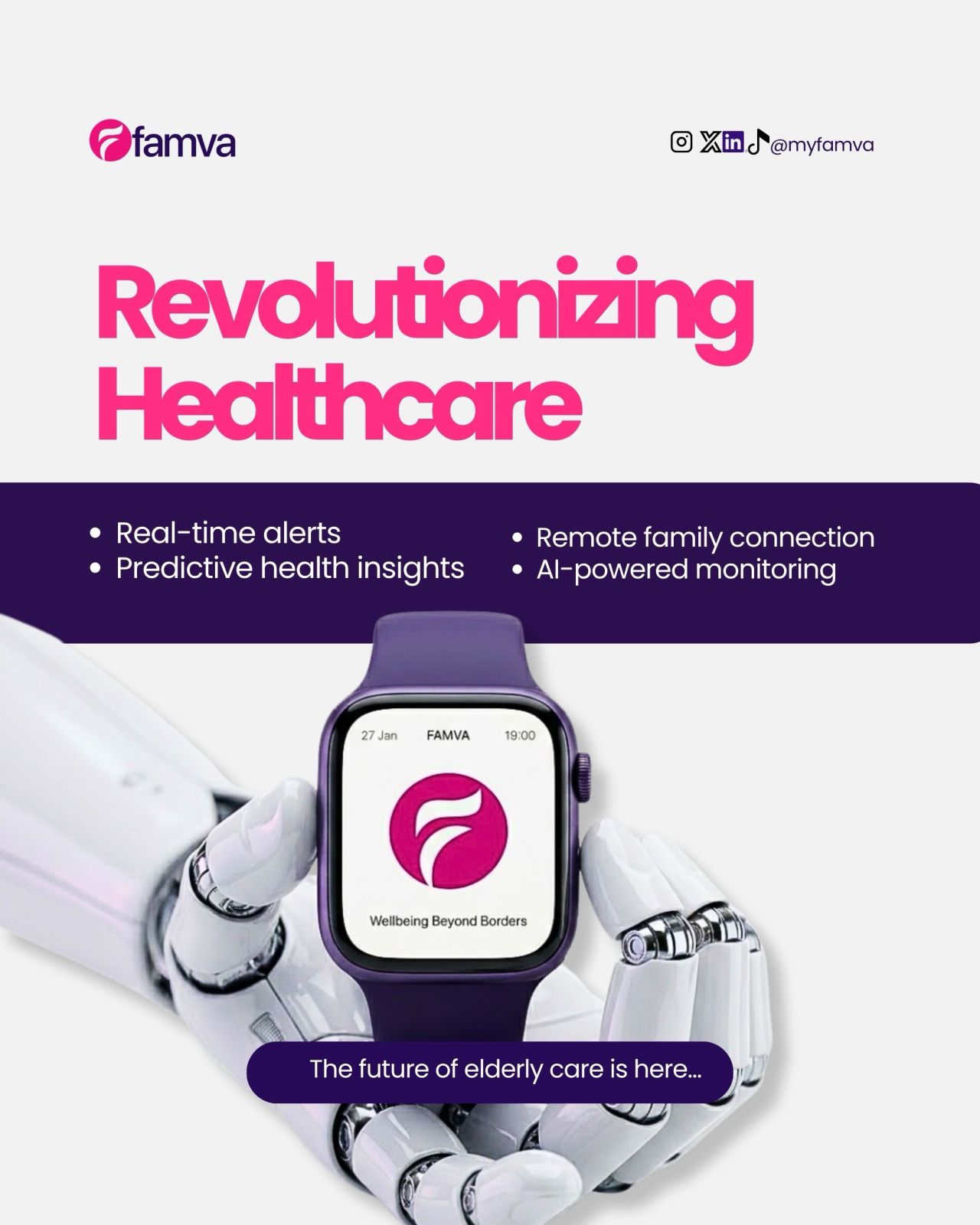
Famva is being developed to help families stay connected to the wellbeing of elderly loved ones regardless of location.
The platform is designed to support independent living while helping families remain informed, reassured, and proactive.
Famva focuses on:
Daily wellness tracking
Activity and routine monitoring
Smart wellness insights
Early awareness of behavioural changes
Better communication around elderly wellbeing
The goal is not to replace family care or human connection, but to strengthen it through technology and proactive support.
As families become more globally connected, platforms like Famva are helping redefine what modern elderly care looks like.
Supporting Independence Through Better Awareness
A common misconception about remote monitoring is that it reduces independence.
In reality, the opposite is often true.
When families have better awareness of wellbeing patterns, elderly individuals may be able to maintain independent living for longer while receiving support earlier when needed.
Remote monitoring can help encourage:
Healthier routines
Increased confidence
Early intervention when concerns arise
Reduced stress for both elderly individuals and their families
The focus is not control.
The focus is reassurance, dignity, and support.
The Future of Elderly Care Is Preventive
One of the biggest shifts happening in elderly wellness today is the move toward prevention.
Families no longer want to wait until:
A hospital visit becomes necessary
A serious health issue develops
An emergency occurs
Instead, there is growing demand for:
Early awareness
Real-time wellness insights
Preventive support systems
Smarter family care coordination
As people continue living longer and families become increasingly geographically dispersed, remote wellness monitoring is becoming less of a convenience and more of a necessity.
Technology is now helping families stay informed, connected, and proactive in supporting the people they love most.
Final Thoughts
Distance should not prevent families from staying connected to the wellbeing of ageing parents.
As family structures and lifestyles continue to evolve globally, elderly care must evolve alongside them.
Remote monitoring offers families a smarter and more proactive way to support elderly loved ones while preserving independence, dignity, and peace of mind.
And with the rise of AI-powered wellness platforms like Famva, the future of elderly care is becoming more connected, intelligent, and supportive than ever before.
Learn more about Famva and join early access — click to join the waitlist
About the Author
Nosakhare Eguagie is a digital marketing and communications specialist passionate about healthcare innovation, AI, and technology-driven solutions that improve quality of life and business.