Famva
Why I broke the script to build the future of cross-border care - CEO & Founder Famva
Famvablog

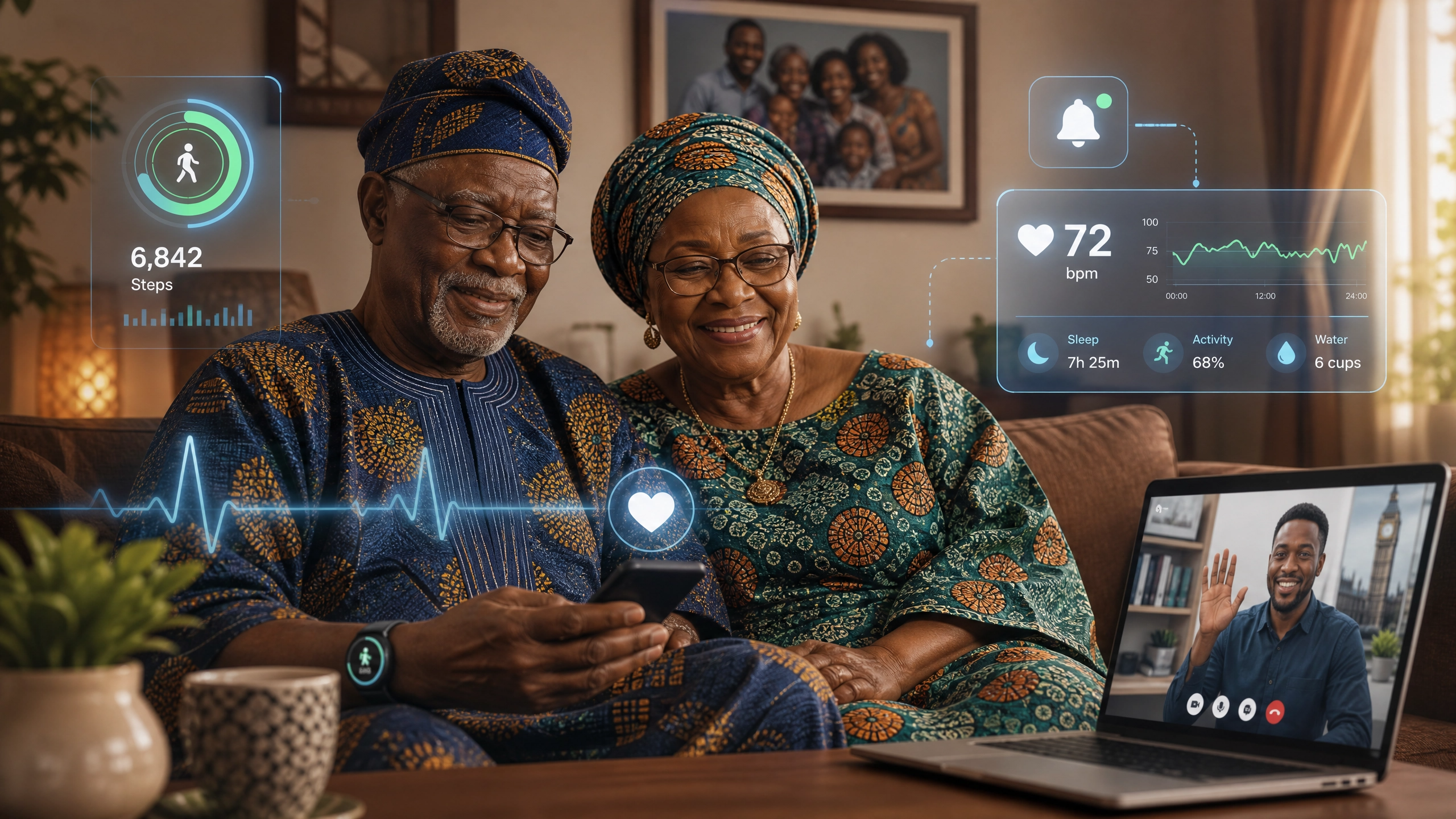
A generation of adult children living thousands of miles from ageing parents. Carrying the financial weight of cross-border support. Sending remittances.
The Cage Was Too Small: Why I broke the script to build the future of cross-border care — CEO & Founder Famva
When I arrived in the United Kingdom, I was handed an invisible script. Not in writing, nobody sat me down and read it to me. But it was there, in the things people said, in the assumptions made about what I could want, what I could build, what I was permitted to dream.
There is a path, it said. Follow it. Stay in your lane. Be grateful for the opportunity. For a while, I did. Then something shifted.
The cage that other people’s words had built around my ambitions started to feel unbearably small. Not because I had become ungrateful. But because I had begun to see clearly. And what I saw in my work, on the front lines of UK healthcare made it impossible to stay quiet.
I work with elderly people. I have watched what happens when small, manageable health concerns go unnoticed until they become crises. I have seen what preventive care looks like when it works and I have seen the devastating gap it leaves when it doesn’t.
In the UK, we have infrastructure for this. Structured follow-ups. Repeat prescriptions. Systems designed to catch what individuals miss.
But back home, most people still only go to the hospital when something has already gone wrong. Wellness checkups are occasional at best. The dominant model of care is still reactive you feel sick, then you seek help.
That is not a failure of intelligence or love. It is a failure of infrastructure and expectation.
We have accepted “I’m fine” as sufficient. We send money, we make calls, we say a prayer and we accept the silence as good news.
It is not good enough. And deep down, most of us already know that.
There is a sociological concept I keep returning to.
The sociologist Talcott Parsons wrote about the isolated nuclear family, the idea that as societies modernise and industrialise, the extended family network fractures. People move away from where they grew up. Proximity to parents and grandparents becomes the exception rather than the norm. The emotional and practical bonds of care that were once embedded in everyday geography get stretched, and eventually strained.
Parsons was writing about Western industrialisation in the twentieth century.
He could not have imagined the Japa syndrome.
For those unfamiliar, Japa is the Nigerian colloquial term for emigrating abroad, particularly to the UK, US or Canada. It describes the movement of a generation of talented, ambitious Nigerians leaving home in search of opportunity, stability and space to grow.
It is, in many ways, a testament to aspiration. A generation refusing to accept ceilings.
But it has created something that nobody talks about enough.
A generation of adult children living thousands of miles from ageing parents. Carrying the financial weight of cross-border support. Sending remittances. Making Sunday phone calls. Loving deeply from a distance.
And receiving, almost universally, the same answer.
“I’m fine. Don’t worry about me.”
The isolated nuclear family Parsons described has gone global. The fracture is no longer between a city and a village. It is between continents. Between time zones. Between a life built in Birmingham and a parent growing older in Ibadan.
The emotional tax of this is real and significant. I know it because I carry it. I know it because every diaspora professional I have spoken to carries it too.
We have accepted a model of care that depends entirely on hope — hope that the money sent home translates into actual wellness, hope that the silence between calls means everything is fine, hope that distance does not matter as much as it does.
But hope is not a care strategy.
Preventive care, the kind that catches a pattern before it becomes a problem, the kind that gives families real visibility into daily wellbeing rather than crisis management after the fact — is not a luxury for Western healthcare systems.
It is what every family deserves. Regardless of geography. Regardless of distance. Regardless of the passport in your pocket.
I turned my lemons into lemonade. I took the cage that was built around my dreams and I broke it apart, piece by piece, using everything I had, my clinical training, my data science background, my personal experience of this exact problem.
I am building something, to bridge this gap and I can tell you this; it starts with refusing to accept that “I’m fine” is enough.
And it starts with believing that diaspora caregiving, the quiet, costly, emotionally exhausting labour of loving someone from far away, deserves infrastructure as serious as the love behind it.
What does “I’m fine” really mean when your parent says it?
If you are navigating this distance right now, I would love to hear your experience in the comments.
Until next week,
Eleanor Ojo-Emovon — Founder & CEO, Famva
Building cross-border wellness tech for diaspora families